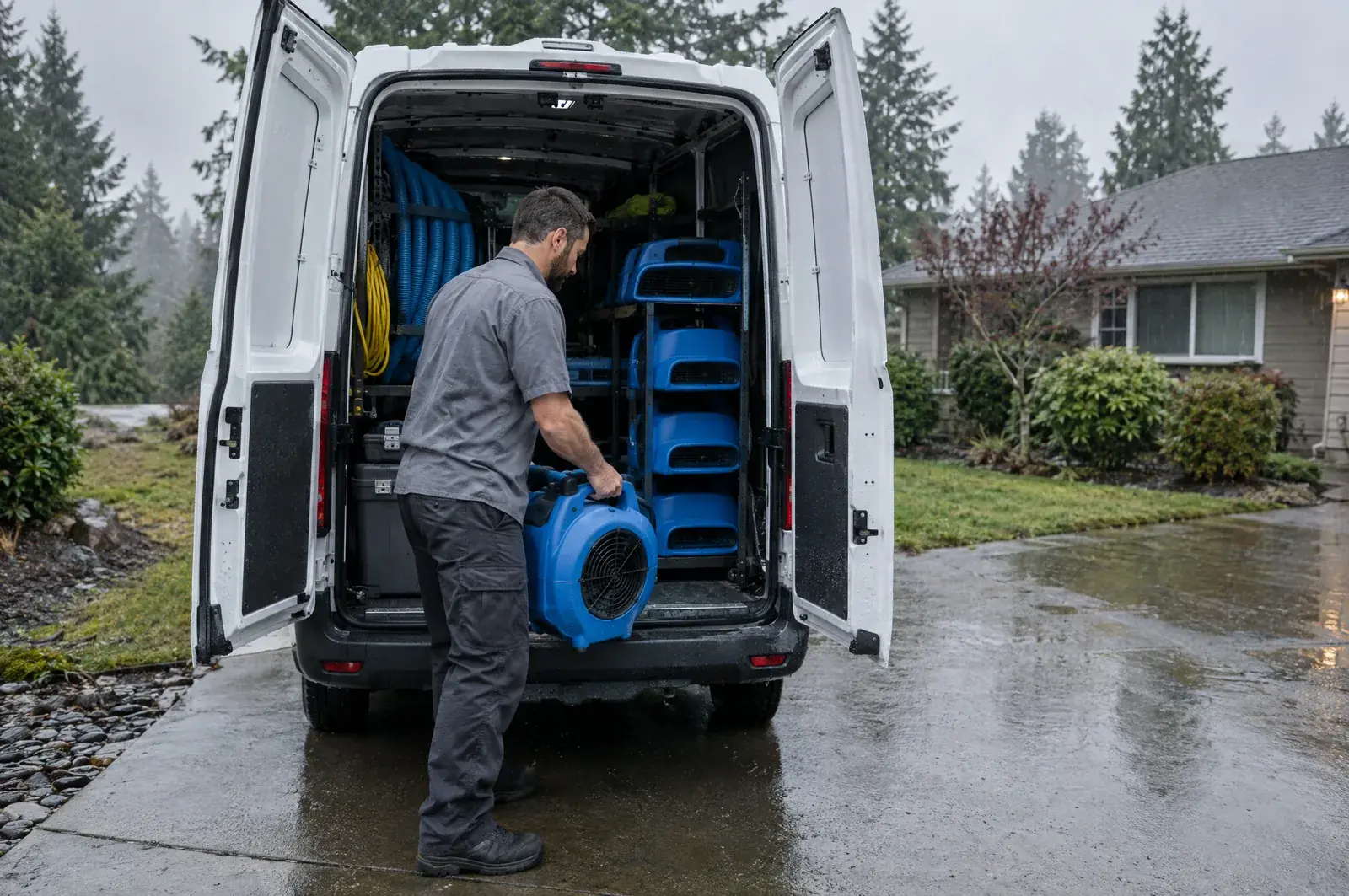
By the time someone dials a restoration company, something has already gone wrong: a supply line let go overnight, a water heater failed in the garage, a wall came open and there was growth behind it. People are stressed, they may be dealing with an insurance carrier for the first time in years, and they are being asked to make expensive decisions about a building they suddenly do not understand. Legacy Water & Mold Restoration is built around that reality rather than around a sales script.
The documentation is part of the work. The IICRC S500 standard calls for moisture readings to be recorded through drying, and photos plus a written record of what was removed and why round out the file. Ask any restoration company for that file, because the one time you need it, it cannot be recreated after the fact.
You should not have to take our word for it. In this trade the customer rarely has the tools to verify the work. You cannot tell by looking whether the framing behind your new drywall was dry when it got closed in. That is why moisture readings, and photos taken before anything is removed, matter so much. The IICRC S500 and S520 industry standards describe how water damage and mold work should be done, and a written record lets you check the work against them.
Turlock homes break in specific ways. The median home in Turlock was built in 1984, and about 41% were built before 1980 (Census ACS), so supply lines, water heaters and drain lines of that age are a common source of loss. Summers in the valley are hot and dry, but most of the year's rain falls November through April, and winter mornings sit near saturation, so a wet wall cavity in January does not dry on its own. Equipment and moisture readings, not open windows, decide when a structure is dry.