Mold is a symptom, not the disease. Something stayed wet long enough, and mold is what grew on it. Remove the growth without resolving the moisture and you have scheduled the same job again.
How Mold Gets Started In A Turlock Home
Mold needs moisture, something organic to feed on, and time. Your house supplies the food in the form of wood, paper-faced drywall, carpet backing and dust. The moisture is the part that changes.
Turlock is dry most of the year. July afternoons average around 23% humidity at the Modesto airport, and the summer months get almost no rain. That is why mold here is rarely a whole-house humidity problem. It is usually a local water problem: a leak in one spot, kept wet long enough.
The common patterns:
- A slow plumbing leak. A supply line, drain or valve dripping inside a wall or under a sink cabinet, often for weeks before anyone notices. The median Turlock home was built in 1984, and about 41% were built before 1980, so many homes have original valves and connections that have seen decades of use.
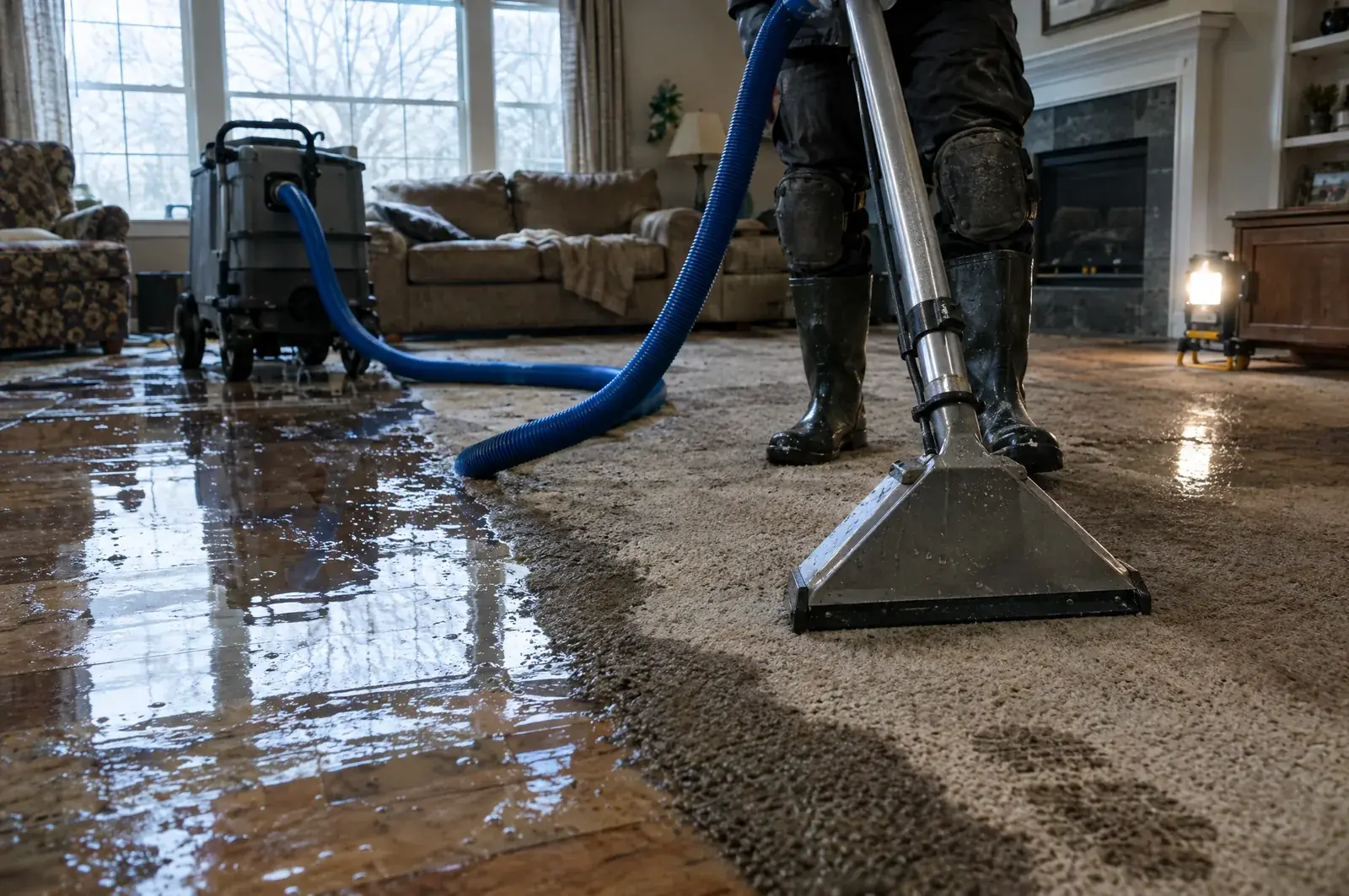
- A water loss that was not fully dried. The carpet felt dry and the stain faded, but the bottom plate or the back of the drywall stayed wet. This is the most preventable source of all.
- Winter rain finding a way in. Roughly 89% of Turlock’s rain falls between November and April. A roof, flashing, window or door leak in January can keep a ceiling or wall wet for weeks.
- Winter condensation. Early mornings in December and January run near 90% relative humidity, and tule fog is common. Cool exterior walls, closets against outside walls, and poorly vented bathrooms can collect enough moisture to support growth.
Containment Is Not Optional
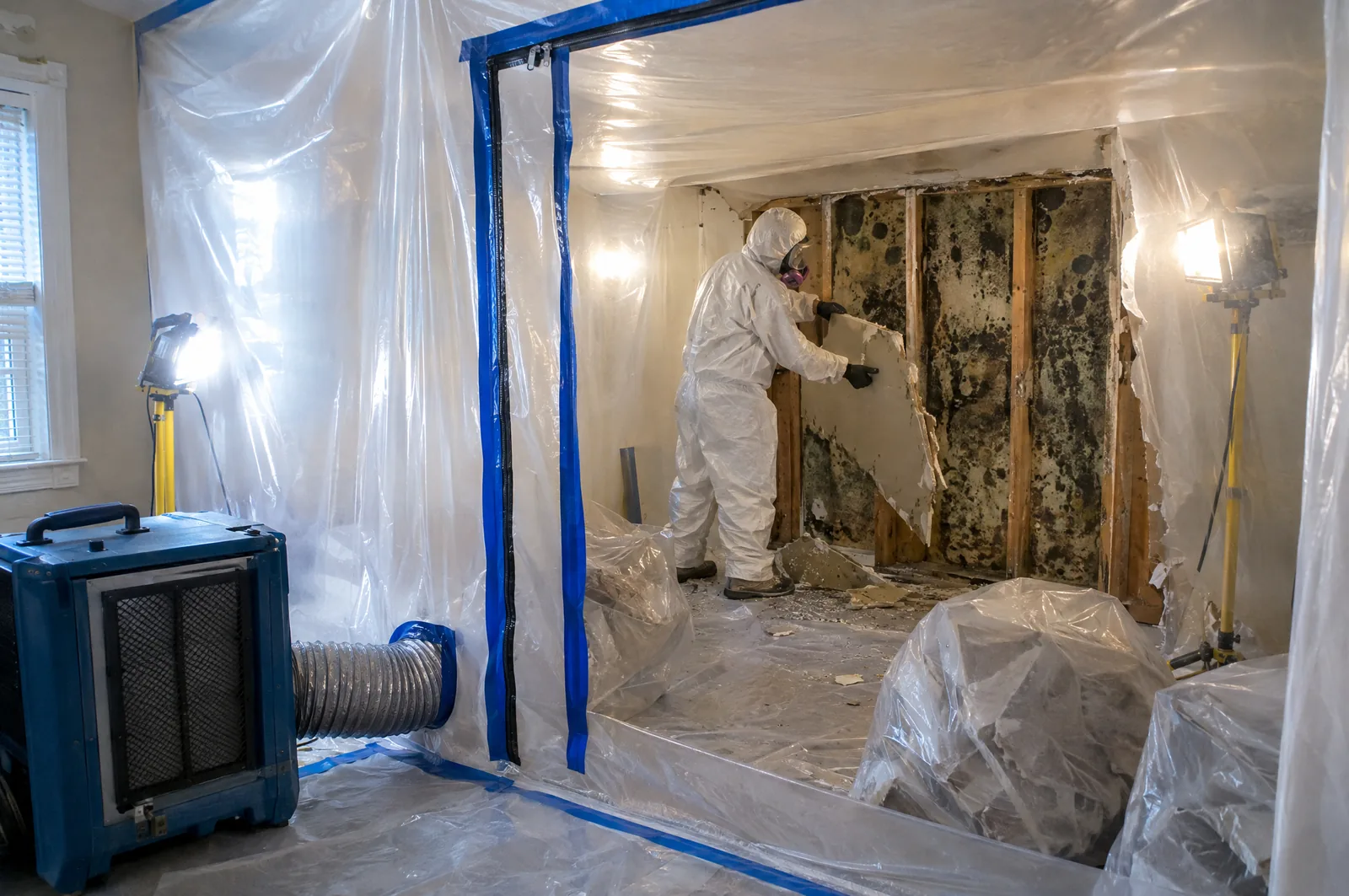
Mold sitting undisturbed on a wall is a localized problem. Mold being scraped, cut or torn out is an aerosol.
That is why the IICRC S520 standard puts containment ahead of removal, including on small jobs. The work area is kept at lower pressure than the rest of the house so air flows in rather than out, HEPA filtration captures what goes airborne, and the HVAC in that zone is shut down and covered so the ductwork cannot carry spores into bedrooms at the other end of the house.
Remediation without containment can make the overall problem worse while making one wall look better.
What California Law Says, And Does Not
California’s Toxic Mold Protection Act of 2001 (Health and Safety Code sections 26100 to 26156) set out a framework for the state to address indoor mold. It does not give homeowners a simple number that makes a mold result “legal” or “illegal.” The sound approach is the one the industry standards describe: fix the water, remove growth under containment, clean and dry what remains, and verify.
In California, check any contractor’s license on the CSLB website before you hire. Ask for a written scope that names the moisture source, and ask for the readings and photos at the end.
The Part That Gets Skipped
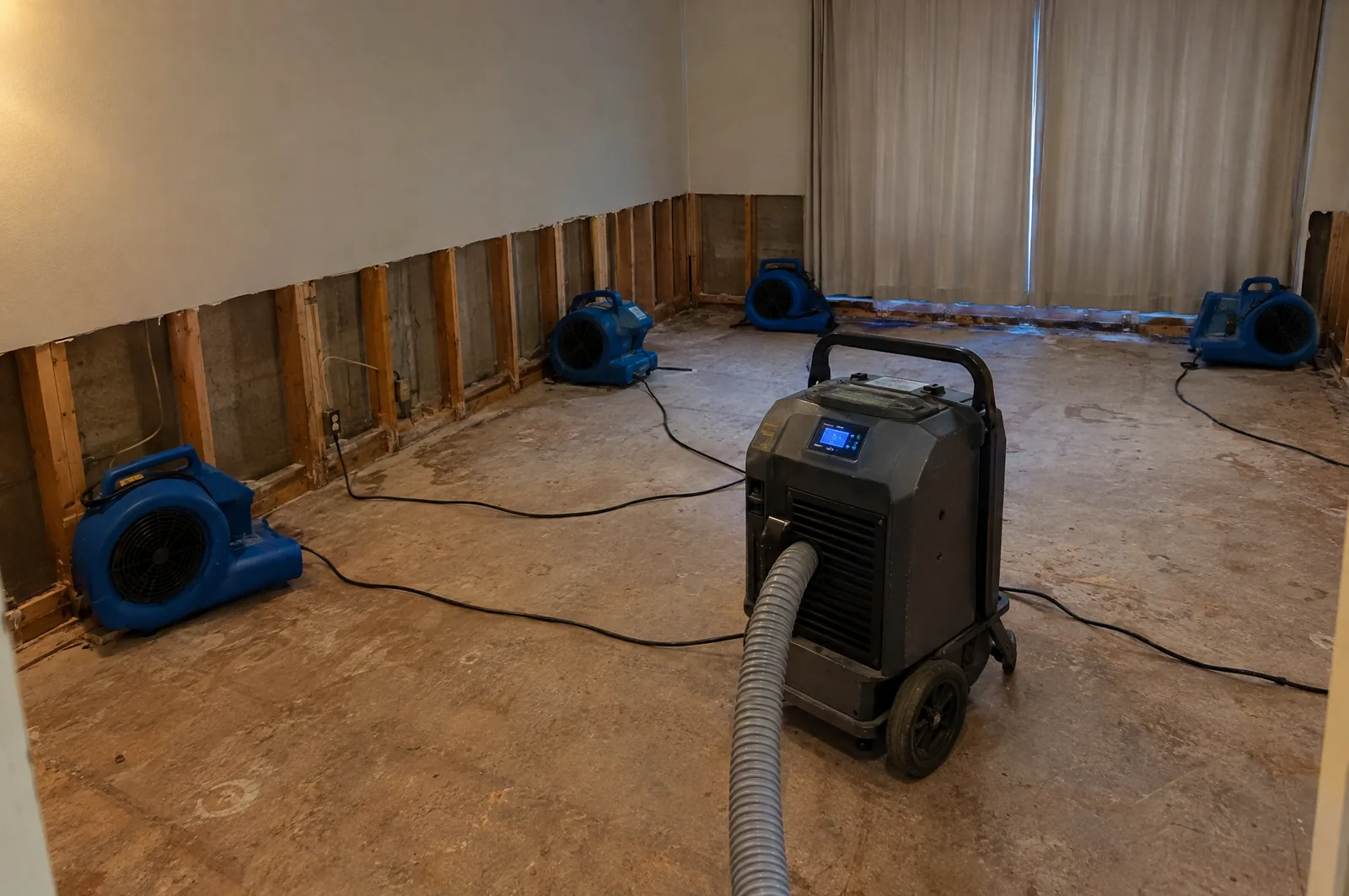
Removal is the visible half. Drying is the half that decides whether it comes back.
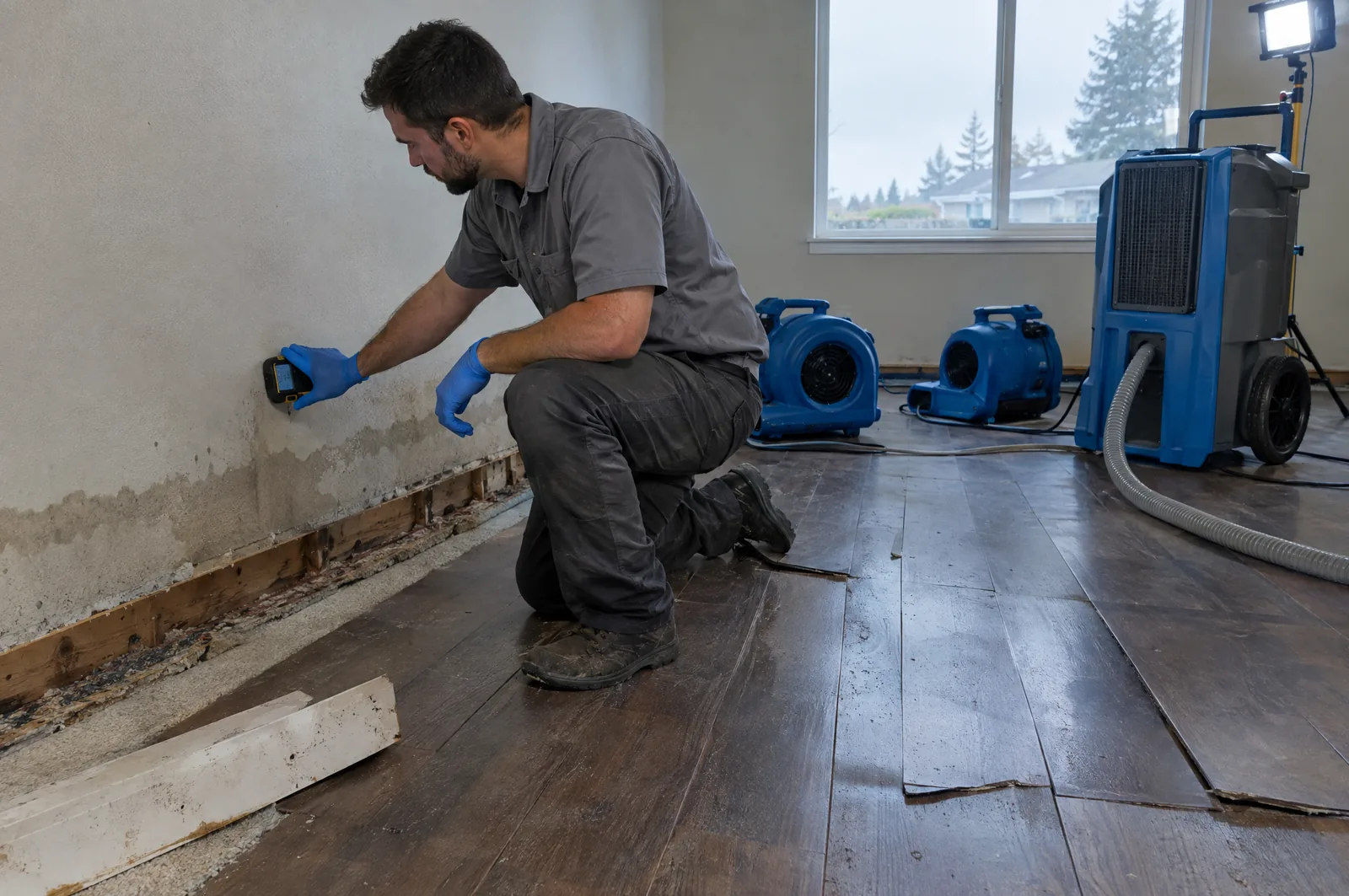
Material that stays in the building has to reach a measured dry standard before anything is closed up. Close a wall on damp framing and the same process starts again, inside a cavity, where nobody finds it until it smells. Readings should continue until the numbers are right, and you should be able to see the log.
Get Help Now
Musty smell you cannot place, or visible growth? Call us. The first step is finding the water, and we will talk you through what comes next.
Sources