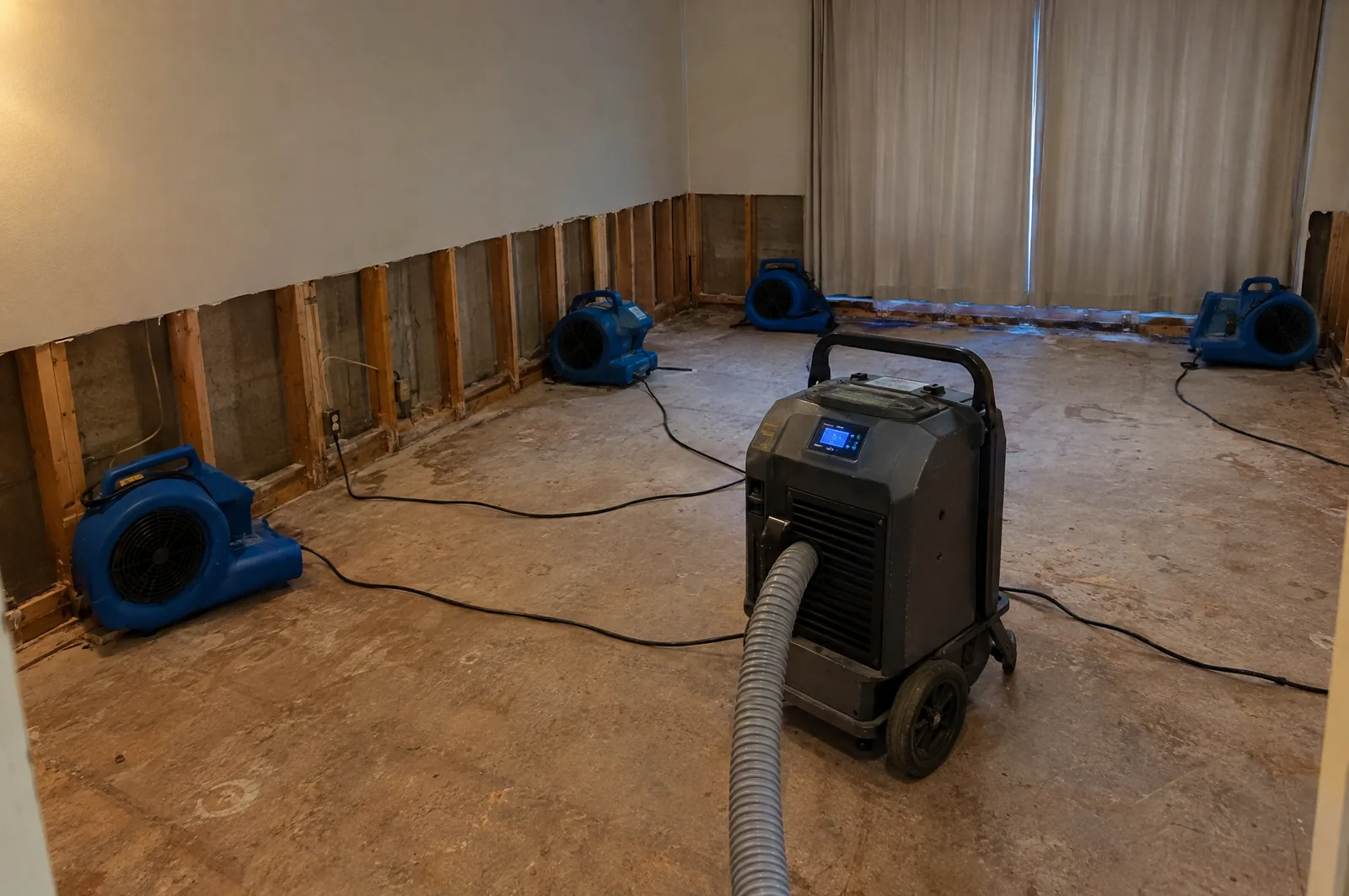
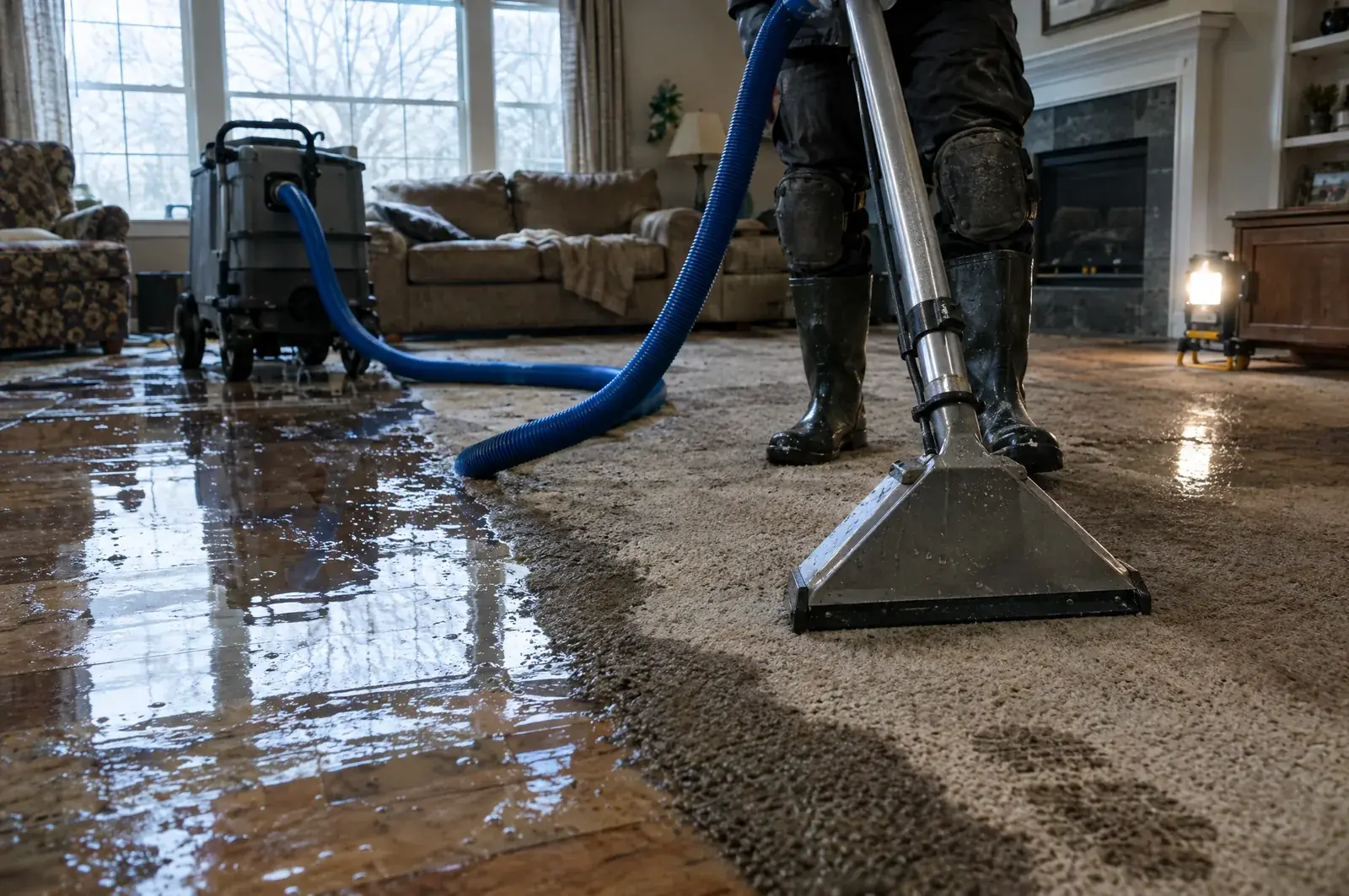
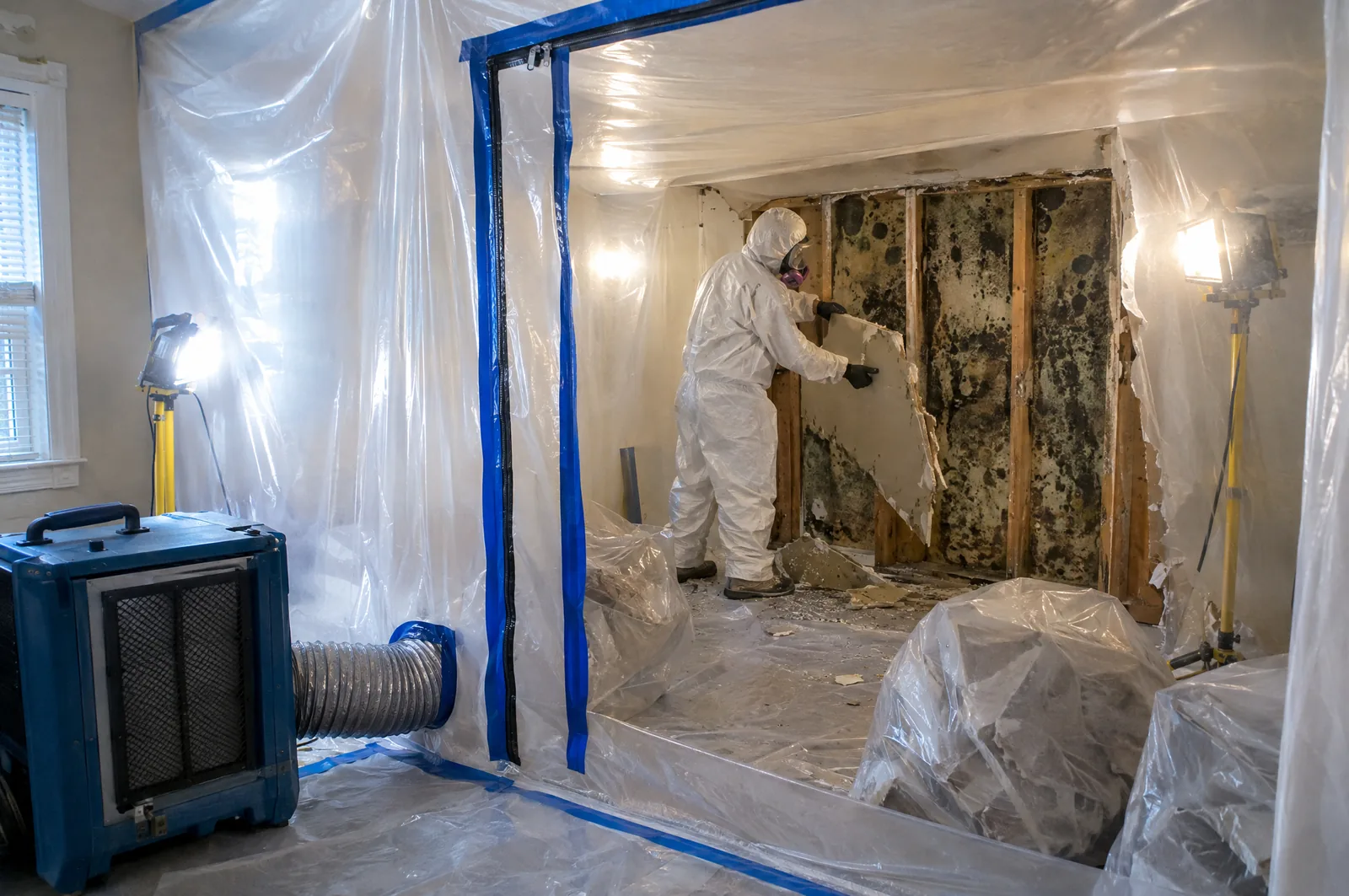
Drying is where a water loss is either finished or quietly turned into a mold problem months from now. It is also the easiest part to fake, because a wall can feel dry to the hand while the framing behind it is still wet.
How Drying Actually Works
Drying works by creating a difference: you make the air drier than the wet material, and the material gives up its water to the air. Then a dehumidifier pulls that water out of the air so the cycle can continue. Air movers speed up the transfer at the surface. Heat helps, within limits. Everything else is measurement.
The measurement that matters for the air is how much moisture it actually holds, not just the relative humidity number on a thermostat. Hot air can hold a lot more water than cool air, so a 94 degree afternoon and a 45 degree foggy morning are completely different drying conditions even before you look at the humidity reading.
Why The Plan Changes With Turlock’s Seasons
Turlock is a dry place most of the year and a damp one for a few months, and a drying plan has to know which one it is working in.
Summer. July highs in Turlock average about 94°F, and afternoon humidity at the Modesto airport averages around 23%. Turlock sees about a dozen days a year at 100 degrees or more. On those afternoons, outside air is often drier than the air in a wet house, and it can help. But it also brings heat and dust, and fast, uneven drying can stress hardwood and some finishes. Outside air should be used only when the readings support it.
Winter. About 89% of Turlock’s yearly rain falls between November and April. In December and January, early mornings run around 89 to 91% relative humidity at the Modesto airport, and tule fog forms after rain on calm, cold nights. That air does not have much room left for moisture. Open the house on a morning like that and you are not drying anything. Winter drying is closed drying, with dehumidifiers doing the work and the house kept warm enough for evaporation to continue.
Spring and fall. These swing day to day. That is exactly why outdoor and indoor readings belong on each visit, rather than picking a method on day one and sticking with it.
Dry Standard, Not “Looks Dry”
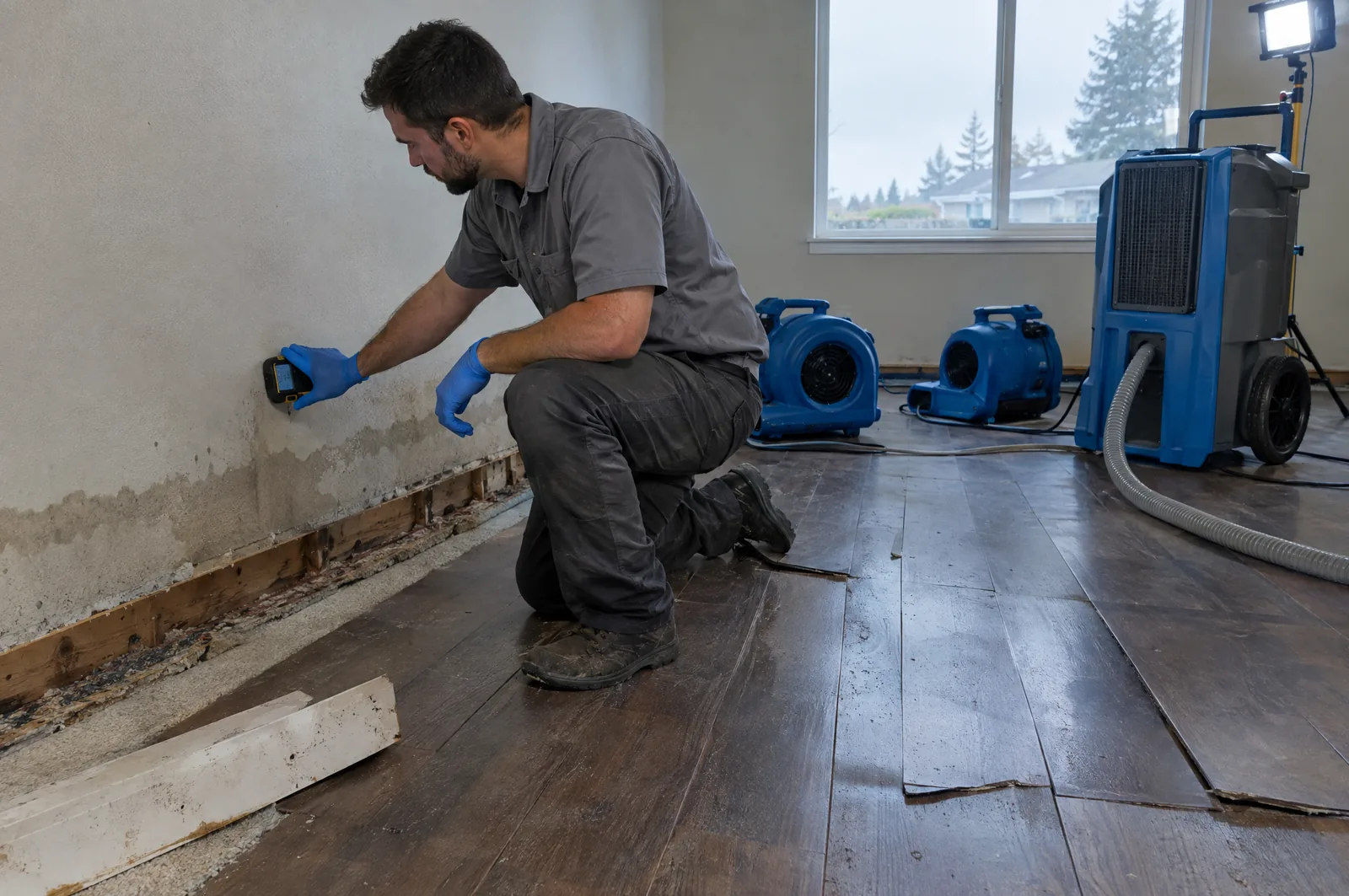
Before equipment goes down, readings are taken from an unaffected area of your house, with the same materials, in the same conditions. That is the dry standard. It is the number the affected materials have to reach.
There is no universal target. The moisture content that counts as dry for drywall and framing in a Turlock home in August is not the same as in January, and it is not a number from a textbook. Taking the baseline from your own home is how the readings mean something.
Then every affected material gets metered on each visit until it reaches that number. Equipment comes out on the readings, not the calendar.
Older Homes, More Layers
The median Turlock home was built in 1984, and about 41% were built before 1980. Older homes have often been remodeled more than once: new flooring over old, cabinets replaced, walls patched. Each layer is another place for water to sit where air cannot reach it. Part of a drying plan in an older home is finding those layers and deciding whether they can be dried in place or need controlled access.
Ask For The File
At closeout, ask whoever dried your home for the moisture logs, the humidity readings, the equipment records and the photos. That file is the evidence that your house was actually dried, and it answers the question if a stain or musty smell turns up later or a home inspector asks about a past water loss when you sell.
Get Help Now
Water got into your walls or floors? Call us. We will talk you through mapping the moisture and drying the structure to a measured standard.
Sources