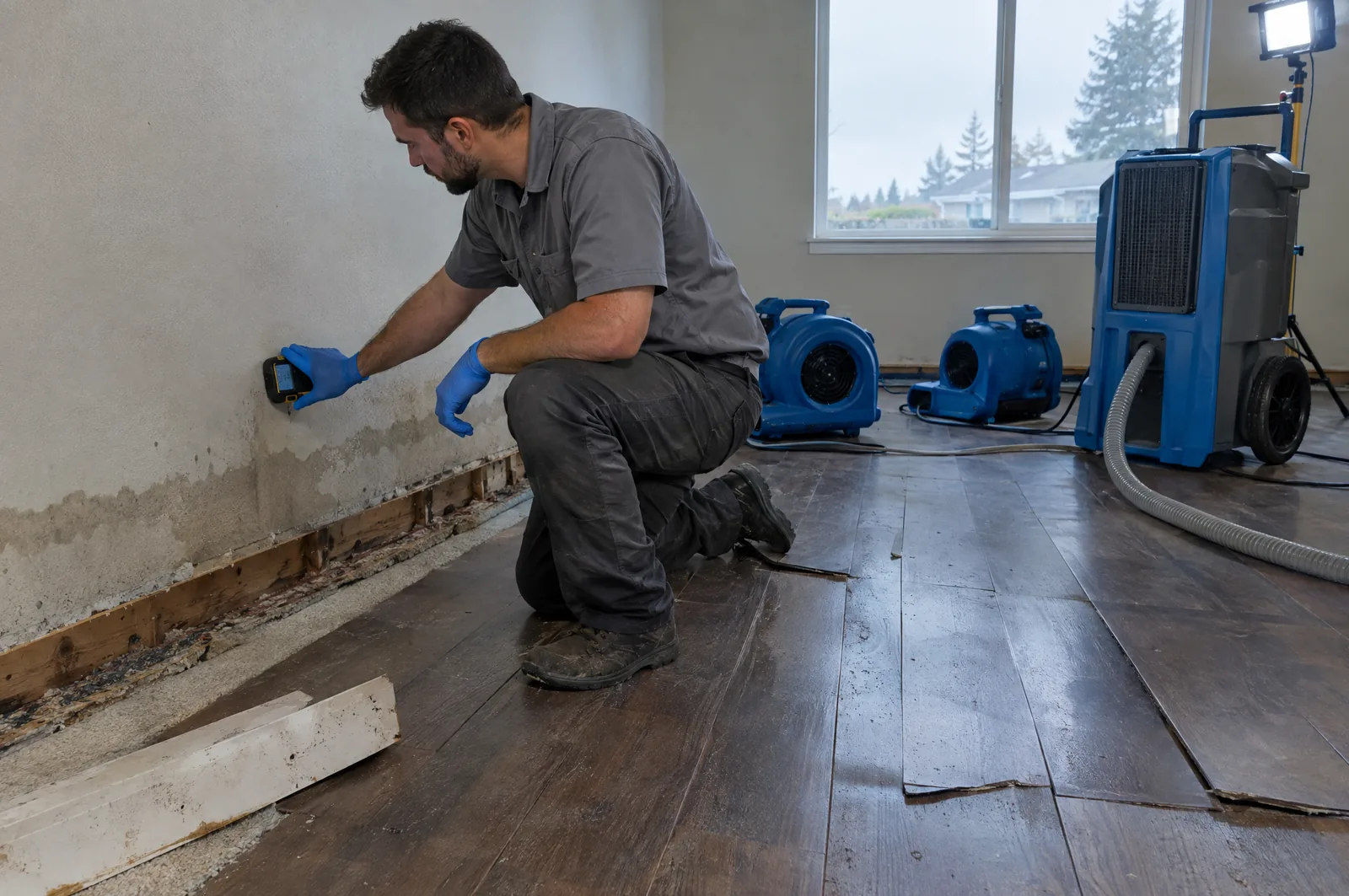
Restoration technician taking a moisture reading on water-stained drywall above a removed baseboard, with air movers and a dehumidifier running in a residential room
Extraction, Drying, Documentation

Water Damage Restoration In Turlock, CA

A supply line let go, a water heater failed, or a winter storm found a way in. The sooner the water comes out, the less of your home has to come out with it.

SERVING TURLOCK, MODESTO, MERCED & STANISLAUS COUNTY

Overview

Water Damage Repair & Restoration For Turlock Homes

Water damage is a clock, not an event. In the first hour it is water on the floor. Within a day it has wicked up the drywall and soaked into the bottom plate. Give it a few days in a warm house and you are no longer drying a home, you are remediating mold in one.

Why Turlock Water Losses Behave The Way They Do

A few things about this part of the Central Valley shape how a water loss plays out.

The weather swings hard between seasons. Turlock averages about 12.6 inches of rain a year, and roughly 89% of it falls between November and April. Summers are close to bone dry, with July highs averaging about 94°F and afternoon humidity around 23% at the Modesto airport. Winter is the opposite: early mornings in December and January run around 89 to 91% relative humidity, and tule fog settles in after rain on calm, cold nights. That means a leak in July and the same leak in January need different drying plans. In summer, outside air can sometimes help. In winter, opening windows can bring moisture in rather than take it out, so the house usually has to dry closed, with dehumidifiers doing the work.

The housing stock is getting older. The median Turlock home was built in 1984, and about 41% of homes were built before 1980, with 18% built in the 1970s alone. Homes of that age often have original shutoff valves, older supply lines, and fixtures that have seen decades of use. Homes plumbed between 1978 and the mid-1990s may also have polybutylene supply piping, which was the subject of a national class action. Not every home has it, but it is worth knowing what is in your walls.

The water changed. Since November 2023, the city has blended groundwater from its wells with treated Tuolumne River water from the Stanislaus Regional Water Authority plant. The city’s 2024 water quality report puts groundwater hardness at an average of 87 ppm and the river water at 59 ppm, which is moderately hard overall. Hardness does not cause leaks on its own, but mineral buildup on valves, water heaters and fixture connections is part of normal wear, and it is worth checking those parts when one of them fails.

Where The Water Usually Comes From

Most of the losses a homeowner faces start inside the house: a supply line under a sink or toilet, a dishwasher or washing machine hose, a water heater tank or fitting, or a fixture that overflowed. The rest come from outside, mostly during the winter rain season, through roofs, windows and doors, or from irrigation and drainage problems near the foundation.

Storms matter here more than the dry summers suggest. In January 2023, a run of atmospheric river storms led to a federal emergency declaration covering both Stanislaus and Merced counties, Bear Creek at Merced hit its flood of record, and a levee breach forced the evacuation of roughly 4,000 people in Planada. Most winters are nothing like that, but it is a reminder that a dry climate still gets real water.

Outdoor watering is another source to rule out. Turlock limits landscape watering to set days and keeps it out of the 9 a.m. to 9 p.m. window, and broken sprinklers are a code issue. A sprinkler head or line that sprays against a wall or soaks the soil at the foundation can push water into a wall or under a floor, and it often shows up as a stain or swollen baseboard nobody can explain.

What It Costs

Water losses are priced by the affected area, the category of water, how much material has to come out, and how many days of equipment it takes to reach dry standard. A contained bathroom leak caught right away and a water heater that ran overnight into several rooms are very different jobs.

A phone quote on water damage would be a guess. A real number comes from an inspection and a written scope. On insured losses, photos and moisture readings give your adjuster something concrete to work from, and your policy determines what is covered.

Why The First Hours Matter

Extracted water is cheap. Evaporated water is expensive. Every gallon pulled out mechanically is a gallon that does not have to go through a dehumidifier, and dehumidifier days are what drive the equipment count and the time on site. That is the case for calling early rather than waiting to see if it dries.

The other reason is category change. Clean Category 1 water from a supply line can degrade into Category 2 within a couple of days as it picks up material from carpet, pad and dust, and faster in a warm house. Category 2 can become Category 3 if it sits. Each step up means more material gets removed instead of dried.

Choosing A Restoration Company

Whoever you hire, ask how they will measure dryness, what they plan to remove and why, and whether you will get the moisture logs and photos at the end. In California, check any contractor’s license on the CSLB website before you hire. A clear written scope and regular moisture readings protect you no matter who does the work.

Get Help Now

Water still spreading? Shut off the source if you can do it safely, then call us about getting the water out and the structure dried.

Sources

Scope of Work

What Our Water Damage Restoration Service Includes

Water Category And Loss Class Assessed First

Before equipment goes down, the water is classified (Category 1 clean, 2 grey, 3 black) along with the class of loss, the approach the IICRC S500 standard lays out. That decides what can be dried in place, what has to be removed, and what precautions the job needs. Guessing here is how homeowners end up with mold behind a wall that looked fine.

A Drying Plan That Fits The Season

Turlock gets roughly 89% of its rain between November and April, and winter early mornings run near saturation, with tule fog common. Summer afternoons are hot and very dry. Indoor and outdoor humidity readings decide whether outside air can help or whether the house needs to dry closed with dehumidifiers.

Built For Turlock's Housing Stock

The median Turlock home was built in 1984, and about 41% were built before 1980. Older supply lines, original shutoff valves and aging water heaters are part of the picture in many homes, so the plumbing near the loss deserves a look, not just the wet floor.

Moisture Mapped, Not Eyeballed

Water travels further than the stain shows. Correct mitigation maps the loss with moisture meters, sets a dry standard from unaffected materials in the same home, and keeps taking readings until every affected material reaches it.

Documentation Your Adjuster Can Use

Photos of the source, the affected areas and everything removed, plus a log of moisture readings, make the cause and the scope clear when you or your agent talk to the insurance company. Ask any restoration company whether you will receive that file.

How It Works

Our Water Damage Restoration Process, Step By Step

  1. Step 1

    Your Call And First Steps

    When you call, we ask three things: is water still running, is anyone at risk (especially near outlets or a sagging ceiling), and can you safely shut off the water. If you cannot find the main, the shutoff at the water heater or under the fixture may stop the source. We get your address and a description of what is wet so we arrive with the right equipment. Until we get there, avoid running household fans or tearing out carpet on a sewage or grey water loss, because uncontrolled airflow and handling spread contamination.

  2. Step 2

    Inspection, Moisture Mapping, And Scope

    The inspection maps how far the water actually traveled with a moisture meter, which is almost always further than what is visible. Readings go on drywall, baseboards, framing, flooring, cabinets and toe-kicks, and a dry standard is set from an unaffected area of the same home. The water category and class of loss are identified, the damage is photographed, and the scope is walked through with you before equipment goes down. Ask your questions here, because this conversation shapes the whole job.

  3. Step 3

    Extraction And Controlled Removal

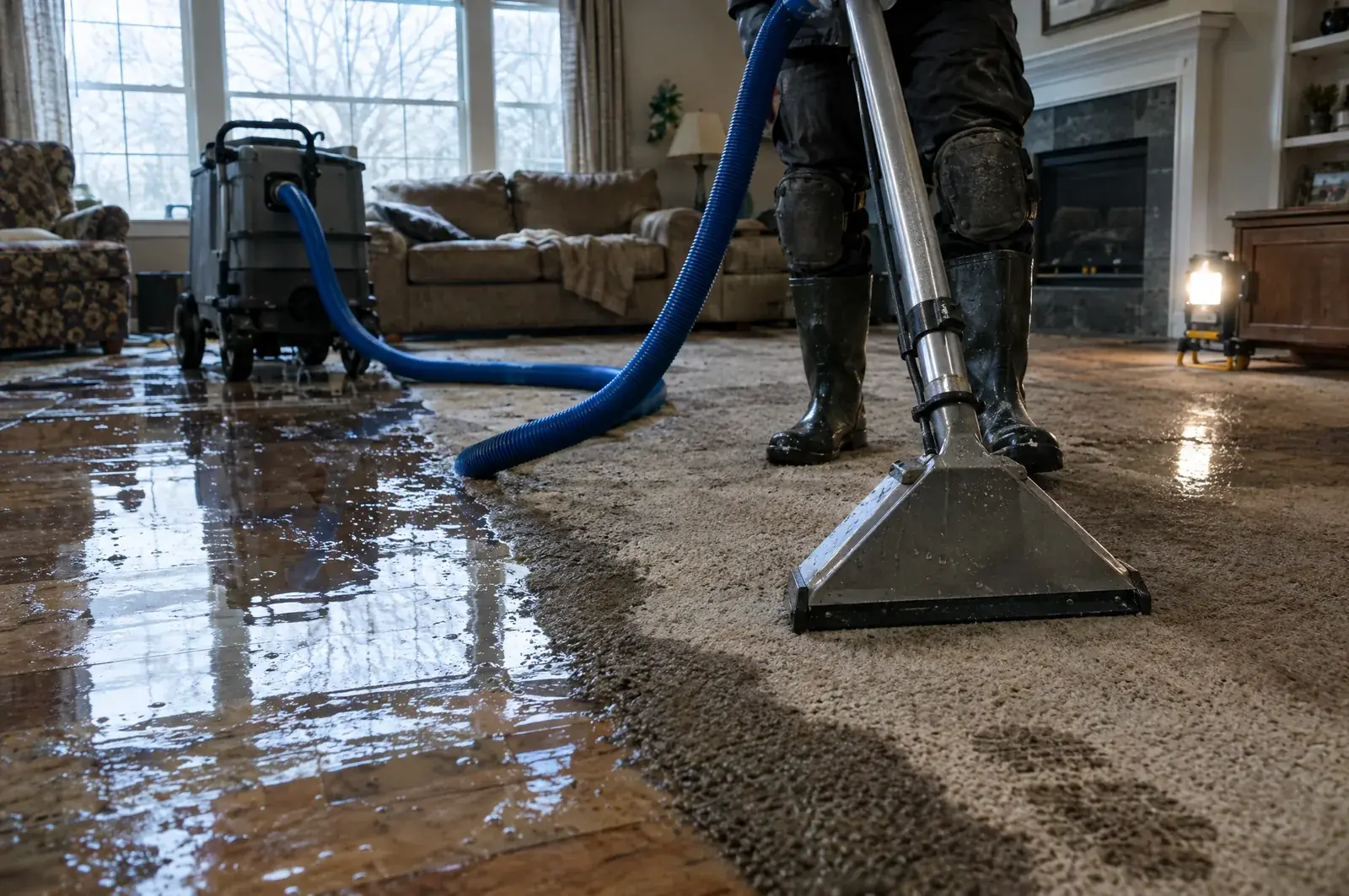
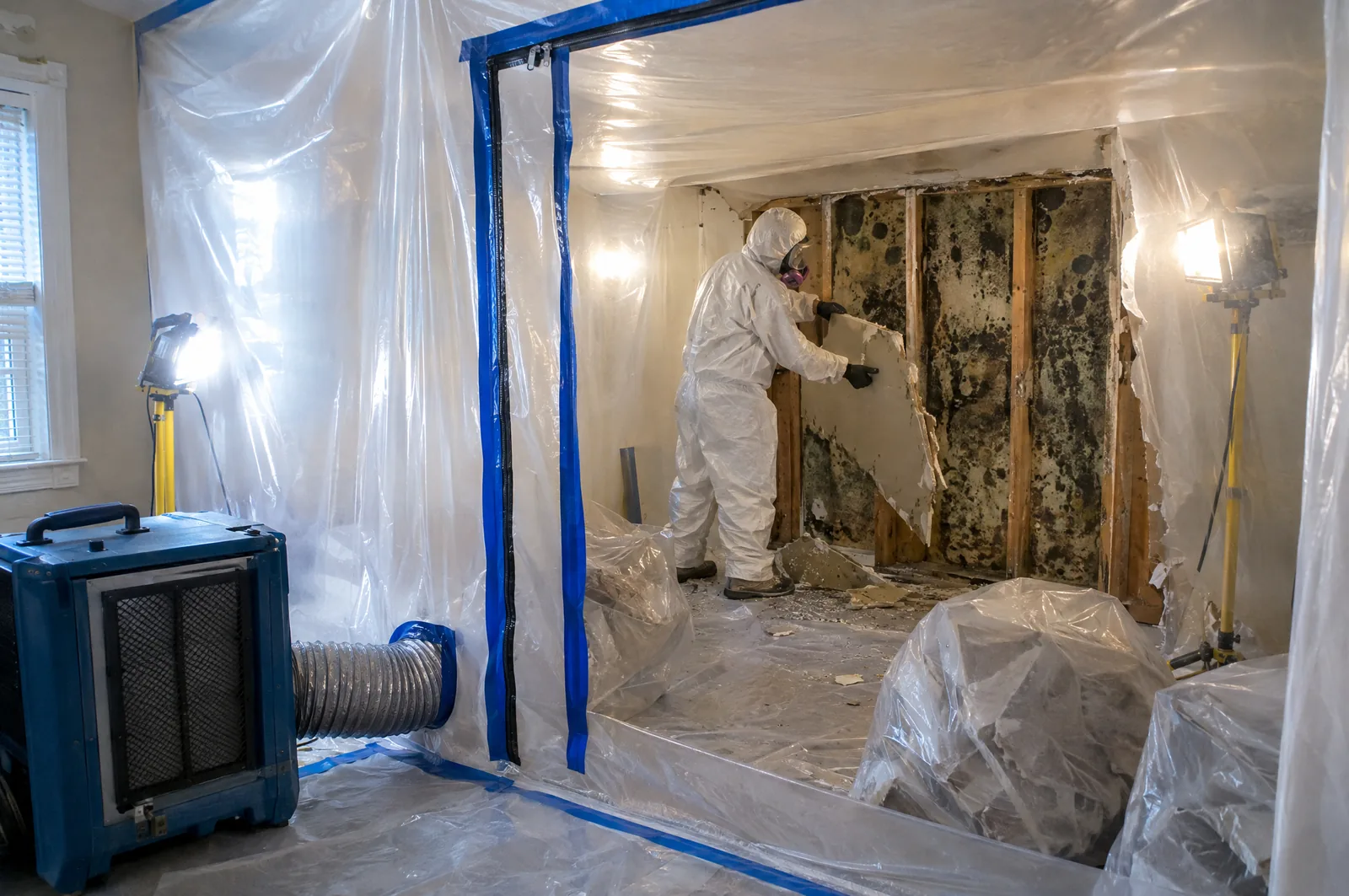
    Standing water comes out first, from the floor, the carpet and pad, and any cavities we can reach. Then only what cannot be dried in place comes out: saturated pad, swollen laminate or particleboard, wet insulation, and drywall below the wick line when readings call for it. Category 2 and 3 losses call for containment before anything is opened. Anything removed should be photographed and listed first, because the adjuster works from documentation.

  4. Step 4

    Structural Drying And Monitoring

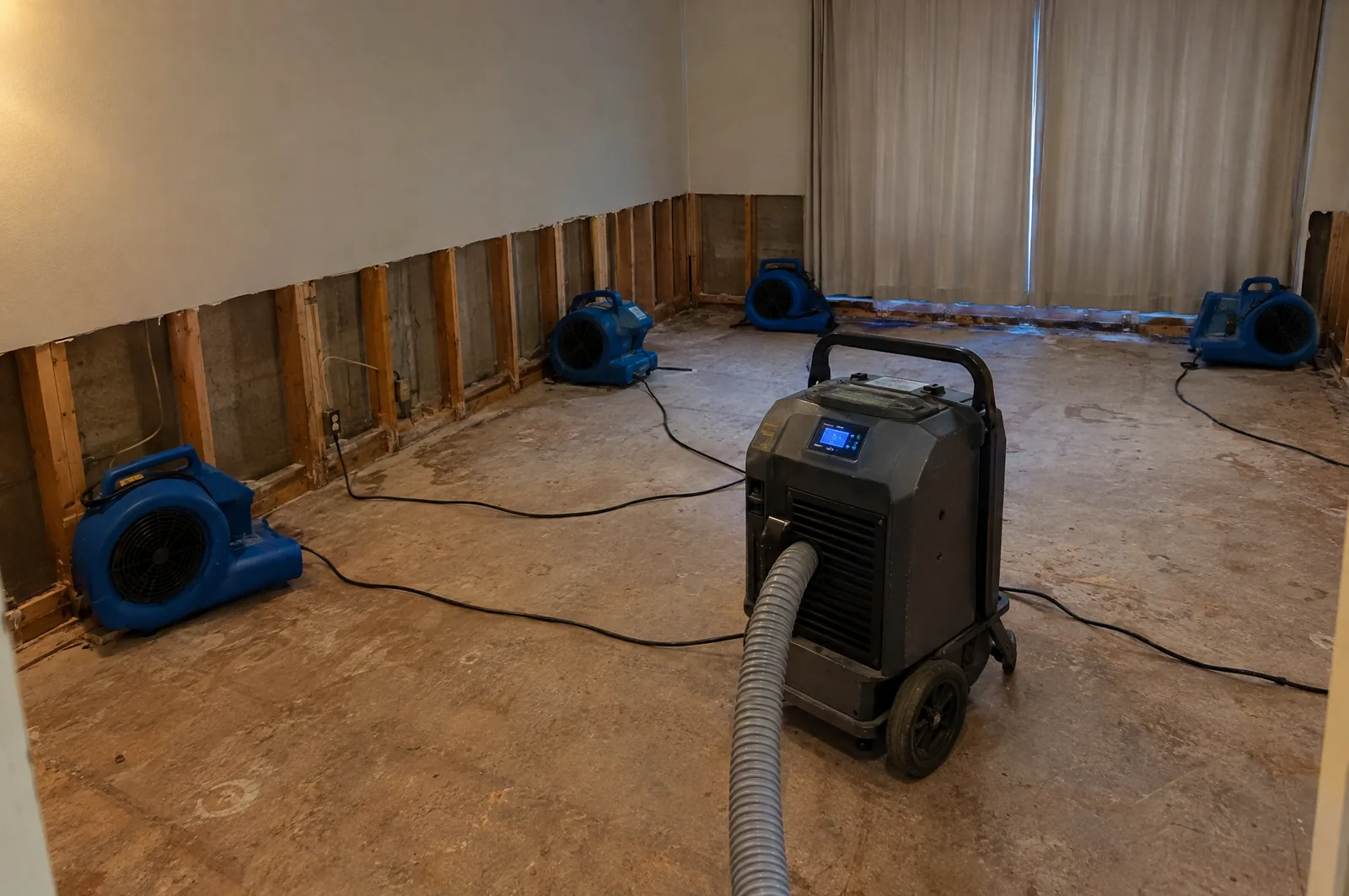
    Air movers and dehumidifiers are sized to the job, based on the affected area, the class of loss and the materials involved. Indoor and outdoor humidity readings decide whether the home dries closed or whether outside air can help. The IICRC S500 standard calls for monitoring moisture throughout drying: readings on affected materials, equipment adjusted as the numbers change, and the results recorded. Many residential losses reach dry standard in three to five days; dense materials and cold, humid winter weeks can take longer.

  5. Step 5

    Dry Standard, Records, And Handoff

    When every affected material reads at or below the dry standard, the equipment comes out and there should be a final walkthrough with you. Ask for the complete file: moisture logs, humidity readings, before and after photos, and a written list of what was removed and why. That file helps your repair contractor and your adjuster, and it means nobody is guessing about what is behind the wall that gets closed up.

Turlock & Stanislaus County

Ready For Water Damage Restoration?

Call now to schedule water damage or mold work in Turlock and nearby towns.

FAQs

Water Damage Restoration Questions From Turlock Homeowners

  • It depends on your policy and the cause. Sudden and accidental water damage, such as a burst supply line, a failed water heater or an overflowing fixture, is commonly covered. Gradual leaks that have been going on for weeks or months often are not, and flooding from surface water usually needs separate flood coverage. Check your policy and talk to your agent. Photos and moisture readings taken from the start give your adjuster something concrete to work from.

  • Mainly the affected square footage, the water category, how many materials have to be removed rather than dried, and how many days of equipment it takes to reach dry standard. A contained leak under a bathroom sink is a very different job than a water heater that ran overnight into several rooms. A real number comes from an inspection and a written scope, not a guess over the phone.

  • For a small, clean spill caught right away, sometimes. For anything that soaked into drywall, cabinets or under flooring, household fans move surface water around without telling you whether the framing behind it is dry. In Turlock winters, open windows can bring in air that is wetter than the air inside. Without moisture readings there is no way to know when it is actually dry, and that gap is where mold starts.

  • Shut off the water supply to the heater and the gas or power before anything else. Once the water is dealt with, keep in mind that California requires water heaters to be braced, anchored or strapped against earthquake movement (Health and Safety Code section 19211), so a replacement should go in with proper strapping. Your plumber can confirm what your installation needs.

  • Many residential losses take three to five days. Hardwood, plaster, cabinets and layered flooring take longer, and drying often runs slower in December and January when early mornings sit near saturation. Equipment comes out when the moisture readings reach dry standard, not when a set number of days has passed, and you should be able to see the readings as the job goes.

  • Usually not. Most water losses affect part of the home and you can stay, though the equipment is loud and the affected rooms are off limits while it runs. Sewage losses, or losses that take out the only kitchen or bathroom, may make a temporary stay elsewhere the better choice. Some policies include additional living expense coverage, so ask your agent.

Water Damage? Mold?

Don't Wait. Call Now.

Call for emergency water damage

Tap To Call (619) 751-1009