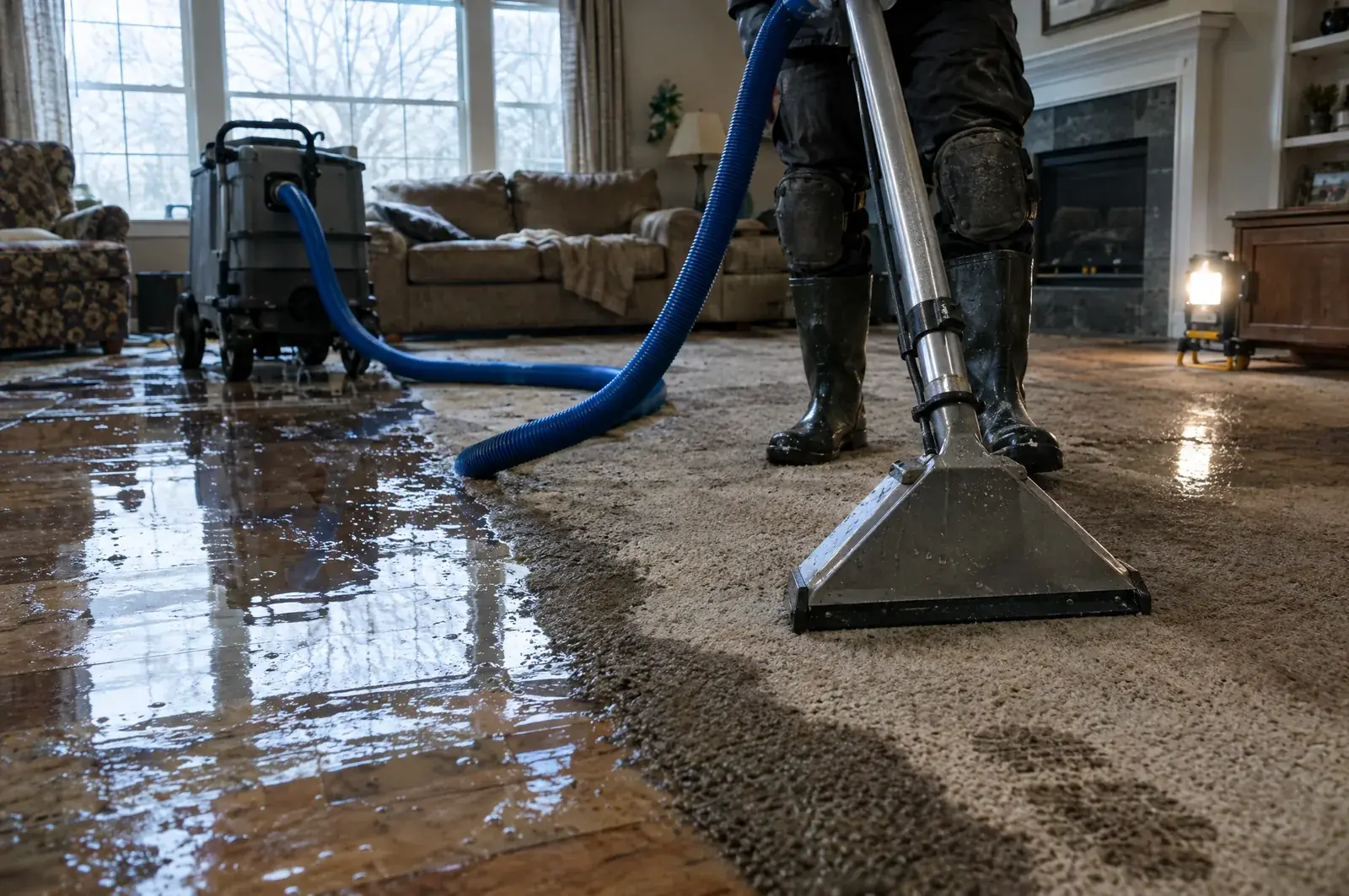
Technician using a weighted extraction wand on soaked carpet beside standing water, with a portable extraction unit and hose during emergency water extraction in a home
Standing Water, Removed Now

Emergency Water Extraction In Turlock, CA

Standing water right now is the cheapest it will ever be to deal with. Every hour it sits, it moves into materials that then have to be removed instead of dried.

SERVING TURLOCK, MODESTO, MERCED & STANISLAUS COUNTY

Overview

Emergency Water Extraction & Standing Water Removal

Extraction is the highest-value step of any water loss, and the reason is arithmetic rather than urgency for its own sake.

Extracted Water Is Cheap. Evaporated Water Is Expensive.

Water removed mechanically costs nothing beyond the time it takes to pull it out. Water left behind has to be evaporated into the air and then pulled back out of the air by a dehumidifier. That means more equipment, more days on site, and a bigger job. Some of it will also soak into materials that then have to be cut out and replaced rather than dried.

A loss where the standing water came out in the first few hours and a loss where it came out the next morning are often very different jobs. The difference is not just more water. It is water that has had time to wick up drywall, swell particleboard cabinet bases, and work its way under flooring.

How The Season Changes The Clock

Turlock’s weather pulls in two directions, and both are reasons not to wait.

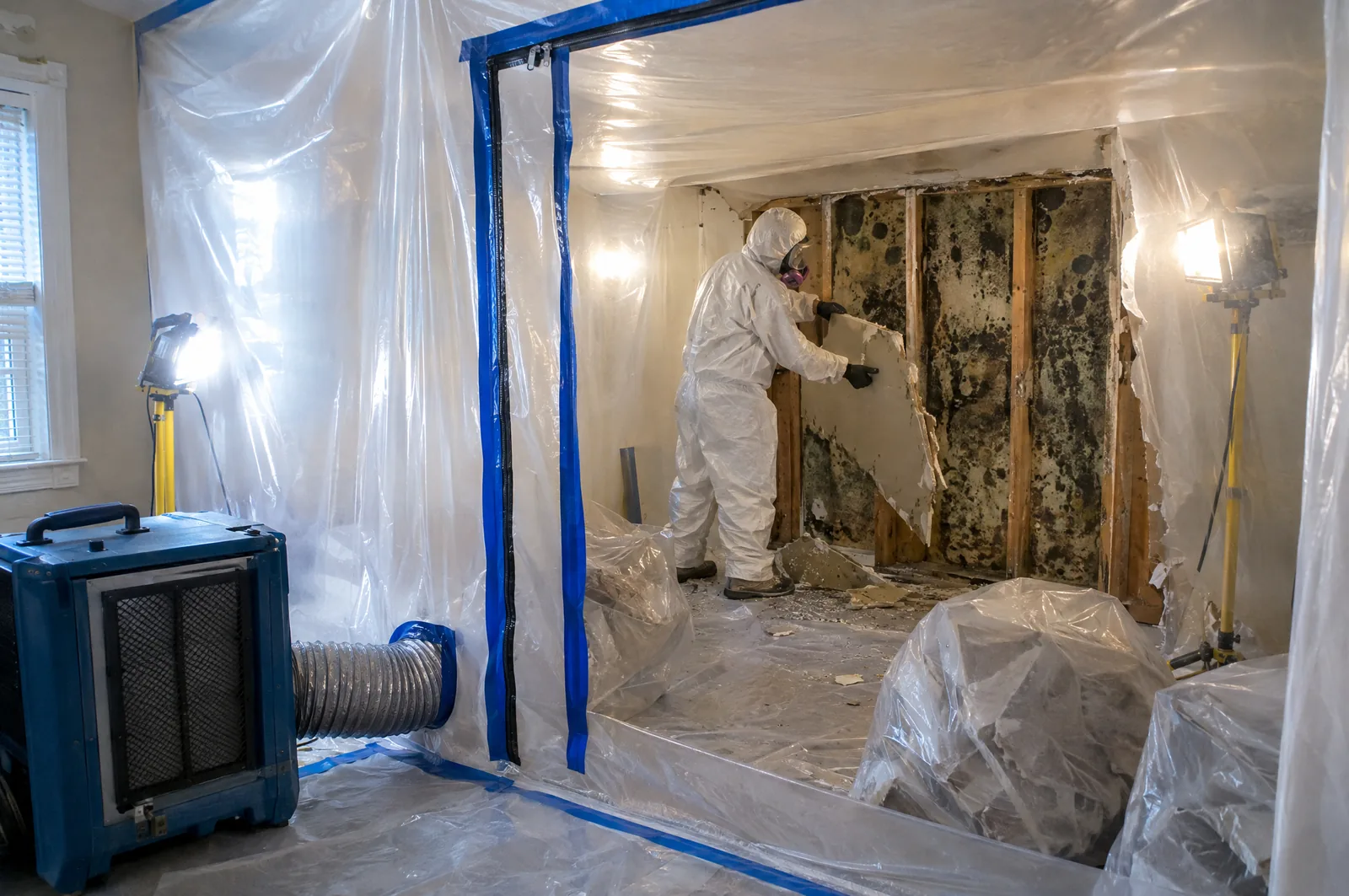
In summer, Turlock averages about a dozen days a year at 100 degrees or more, mostly June through September. Heat on its own helps evaporation, but warm, wet materials in a closed house are also good conditions for bacteria and mold. Clean water from a supply line can degrade toward grey water faster in a warm house than in a cool one, and once that happens, more material has to be removed rather than dried.

In winter, the problem flips. Roughly 89% of Turlock’s rain falls between November and April, and early mornings in December and January run near 90% relative humidity at the Modesto airport, often with tule fog. Damp air does not take up moisture easily, so whatever is left in the carpet and walls dries slowly. Extraction carries more of the load in winter, because evaporation is working against you.

Where The Water Actually Is

The water on the floor is the part you can see, and it is usually not most of it. In a typical home, water from a supply line or water heater failure ends up in the carpet pad, wicked into the bottom of the drywall, under the cabinet toe-kicks, and under laminate or vinyl plank where it cannot evaporate. Each of those needs different tools to reach.

Turlock’s housing stock matters here too. The median home in Turlock was built in 1984, and about 41% were built before 1980. Older homes have often been remodeled more than once, with new flooring laid over old, which gives water more layers to hide in. Whether your home sits on a slab or a raised floor also changes where water goes and how it is reached, so the assessment should account for both.

What To Do While You Wait

  • Stop the water if you can do it safely: use the fixture shutoff, the water heater supply valve, or the main.
  • Turn off power to affected rooms at the panel if you can reach it without standing in water.
  • Move small valuables, papers and electronics off wet floors.
  • Take photos of what you see before you move much of it.
  • Avoid household fans on grey or black water, and do not pull up carpet yourself.

Get Help Now

Water on the floor right now? Call us. We will talk you through getting the standing water out, finding the water you cannot see, and starting a drying plan built on real readings.

Sources

Scope of Work

What Our Emergency Water Extraction Service Includes

Right Equipment For Where The Water Is

Correct extraction matches the tool to the spot: weighted extraction for carpet and pad, smaller units for upper floors and tight spaces, and pumps for pooled water. Most of the water in a real loss is somewhere a shop vac cannot reach.

Extraction Before Evaporation

Every gallon removed mechanically is a gallon that does not have to go through a dehumidifier. That is what controls the equipment count, the days on site, and how much of your home has to be removed.

Source Control Guidance On The Phone

If water is still running when you call, we help you find the shutoff. Stopping the source is worth more than anything else in the first few minutes.

Hidden Water Found, Not Assumed

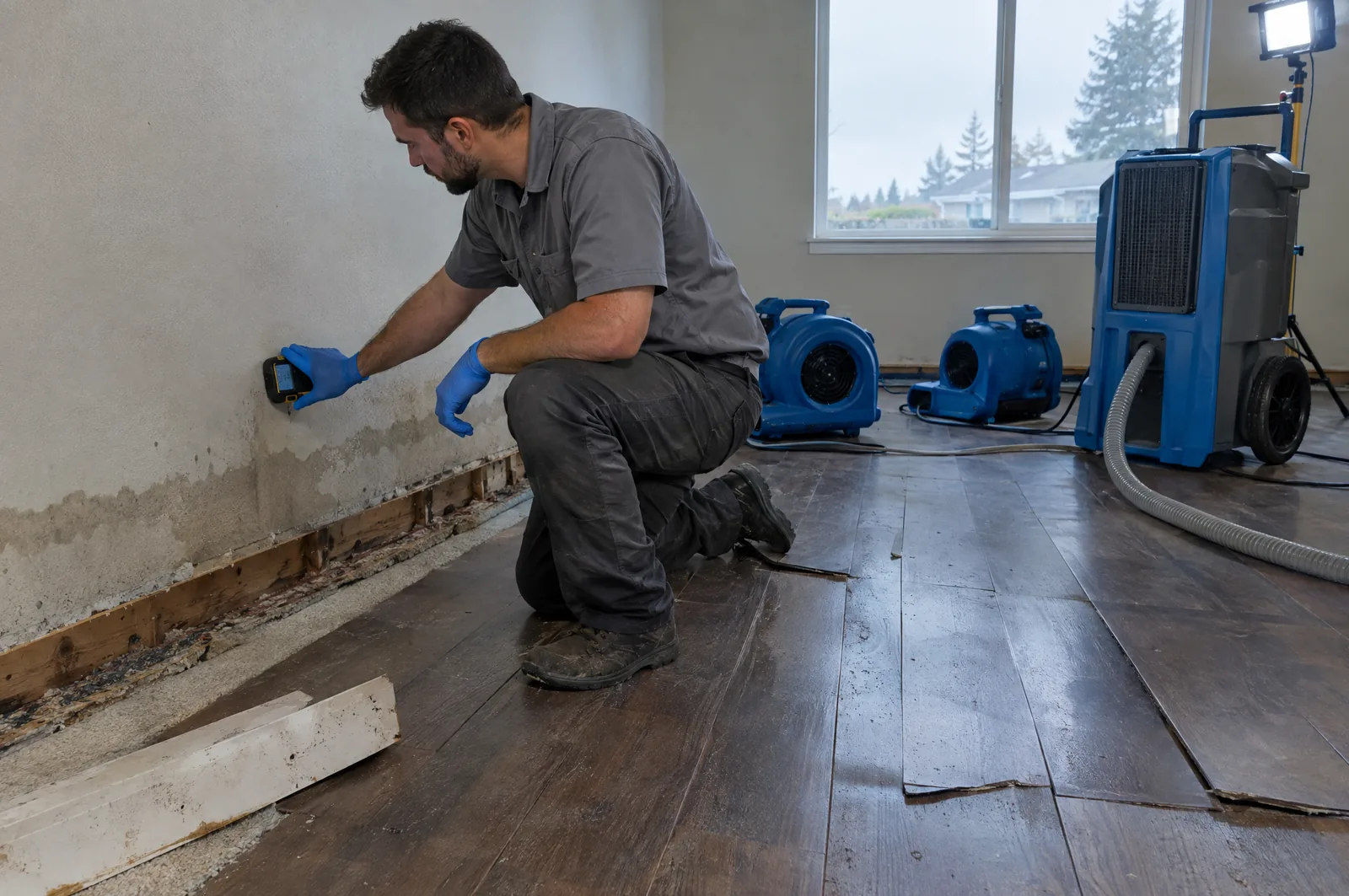
A proper check covers cabinet toe-kicks, wall bases, flooring and adjoining rooms with moisture meters, so the water you cannot see gets found before it turns into swelling, odor or mold.

Why The First Photograph Matters

Photos of conditions before anything is moved give your adjuster a baseline. Ask whoever handles your loss to take them, along with the first moisture readings.

How It Works

Our Emergency Water Extraction Process, Step By Step

  1. Step 1

    Call And Shutoff

    The first question is whether water is still running. If it is, we help you find and close the shutoff, whether that is the fixture valve, the water heater supply, or the main. We confirm your address, roughly how long the water has been sitting, and which rooms and levels are involved, which tells us what equipment to bring. Stay out of standing water if there is any chance it is in contact with outlets, cords or appliances.

  2. Step 2

    Arrival Assessment And Photography

    Before anything is moved, the loss should be photographed as found and initial moisture readings taken. The water category comes next, because clean, grey and black water are handled with different equipment and precautions, followed by a check of where the water has already traveled, including adjoining rooms, closets and cabinets. The rest of the job and your claim are built on this baseline.

  3. Step 3

    Bulk Water Removal

    Standing water comes out first. Weighted extraction pulls water out of carpet and pad in place, and pumps handle water that has pooled. The work runs from the furthest point the water reached back toward the source, so water is not pushed into dry areas.

  4. Step 4

    Trapped And Hidden Water

    The water you can see is rarely most of it. Water also has to come out from under cabinet toe-kicks, along wall bases where it has wicked, and from under flooring where it can be reached. Where water is trapped inside an assembly, access should be opened in the least invasive place that will actually work, and photographed first.

  5. Step 5

    Handoff To Drying

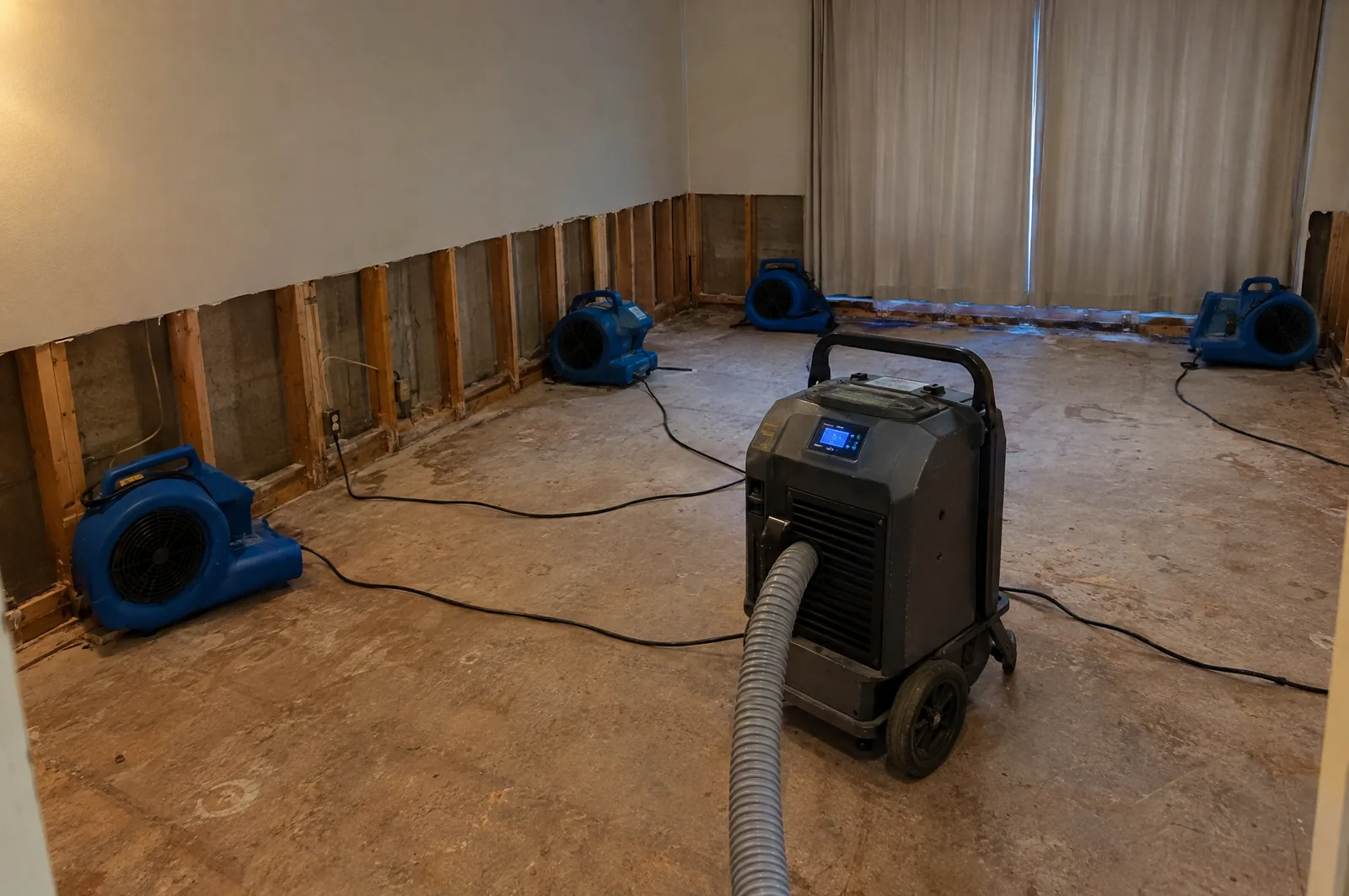
    Once bulk and trapped water are out, a second set of moisture readings sets the drying plan: what stays, what has to be removed, and how much dehumidification and air movement the structure needs. In most cases drying equipment can go in on the same visit. Ask for the extraction photos and the drying scope before the crew leaves.

Turlock & Stanislaus County

Ready For Emergency Water Extraction?

Call now to schedule water damage or mold work in Turlock and nearby towns.

FAQs

Emergency Water Extraction Questions From Turlock Homeowners

  • Often, yes. The question is less how much water there is and more what it got into. A small amount that ran under laminate or into a wall cavity can be a bigger problem than a larger amount sitting on tile. If you can see the full extent of it, it is on a hard surface, and you caught it right away, you may be fine handling it yourself.

  • For a contained spill on a hard surface, yes. A shop vac cannot pull water out of carpet pad, out from under cabinets, or out of the bottom of a wall. That is where most of the water in a real loss ends up, and it is the water that causes trouble later.

  • Extraction is part of mitigating a water loss, so if the loss itself is covered, mitigation is commonly part of that. Sudden and accidental water damage is commonly covered; gradual leaks often are not, and surface flooding usually needs separate flood coverage. Check your policy. Photos and moisture readings from the start of the job give your adjuster something concrete to work from.

  • For most residential losses, a few hours, depending on square footage, how many rooms and levels are involved, and how much water has moved into cabinets and walls. Extraction usually happens on the same visit as the assessment, and drying equipment typically goes down before the crew leaves.

  • Do not hurt yourself doing it. If you can easily lift small items off wet carpet, or put foil or blocks under furniture legs to keep stain from bleeding into the carpet, that helps. Leave heavy pieces for us. Do not start pulling up carpet, because lifting it wrong tears the pad and can spread contaminated water into dry areas.

  • Tell us when you call. Turlock gets most of its rain between November and April, and storm water that comes in through a roof, window or door is handled differently from water that rises from outside ground level, which is generally treated as contaminated. The source also matters for insurance, because policies treat rain intrusion and surface flooding differently.

Water Damage? Mold?

Don't Wait. Call Now.

Call for emergency water damage

Tap To Call (619) 751-1009